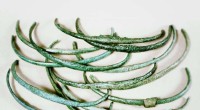
1. Lead: Lead is a relatively soft, malleable, and ductile metal with a grayish-white color. It is a poor conductor of electricity and hence does not readily allow the flow of electric current. The electrical conductivity of lead at room temperature (25°C) is approximately 4.82 × 10^7 S/m (siemens per meter). This value indicates that lead has low electrical conductivity.
2. Pyrite: Pyrite, also known as fool's gold or iron pyrite, is an iron sulfide mineral with a brass-yellow color. Unlike lead, pyrite is an excellent electrical conductor. The electrical conductivity of pyrite is typically in the range of 1 × 10^6 to 1 × 10^7 S/m. This value is significantly higher than that of lead, indicating pyrite's good ability to conduct electricity.
In summary, lead and pyrite are not comparable in electrical conductivity. Lead is a poor electrical conductor, while pyrite is a good electrical conductor.