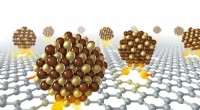
1. Homogeneous Mixtures:
- Homogeneous mixtures, also known as solutions, appear uniform throughout and have the same composition in all parts. The particles in a homogeneous mixture are evenly distributed and cannot be distinguished by the naked eye. Examples of homogeneous mixtures include saltwater, sugar dissolved in water, and air.
2. Heterogeneous Mixtures:
- Heterogeneous mixtures are non-uniform and have different compositions in different parts. The particles in a heterogeneous mixture are not evenly distributed and can be easily distinguished. Examples of heterogeneous mixtures include sand and water, oil and water, and granite (a mixture of different minerals).
3. Colloids:
- Colloids are mixtures that fall somewhere between homogeneous and heterogeneous mixtures. They have particles that are larger than those in homogeneous mixtures but smaller than those in heterogeneous mixtures. Colloids appear uniform to the naked eye, but they can be distinguished under a microscope. Examples of colloids include milk, fog, and gelatin.
4. Suspensions:
- Suspensions are heterogeneous mixtures where the particles are relatively large and settle down over time when left undisturbed. The particles in suspensions can be visible to the naked eye and are usually solid particles suspended in a liquid. Examples of suspensions include muddy water, sand in water, and paint.
5. Emulsions:
- Emulsions are heterogeneous mixtures where two immiscible liquids (liquids that do not mix well) are combined and form a stable mixture. The dispersed liquid is broken down into small droplets and suspended in the continuous liquid phase. Examples of emulsions include mayonnaise, salad dressing, and milk of magnesia.
6. Alloys:
- Alloys are homogeneous mixtures of two or more metals. Alloys have different properties compared to the pure metals they are made of, and they often exhibit improved strength, hardness, and resistance to corrosion. Examples of alloys include steel (iron and carbon), bronze (copper and tin), and stainless steel (iron, chromium, and nickel).
7. Aerosols:
- Aerosols are heterogeneous mixtures where solid or liquid particles are suspended in a gas. The dispersed particles in aerosols are usually very small and can remain suspended in the air for extended periods. Examples of aerosols include smoke, mist, and fog.
These are some common types of mixtures encountered in various fields and everyday life. Each type of mixture has its unique characteristics and behavior, which depend on the properties of its components and their interactions.