Here's a more detailed explanation of the process:
1. Ionic Dissociation: When sodium acetate (CH3COONa) dissolves in water, it dissociates into sodium ions (Na+) and acetate ions (CH3COO-). This process is driven by the polarity of water molecules, which have a slight positive charge at the hydrogen atoms and a slight negative charge at the oxygen atom. The positive charge of the water molecules attracts the negative charge of the acetate ions, leading to their separation from the sodium ions.
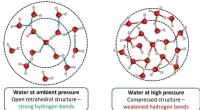
2. Hydrogen Bond Formation: The acetate ions are polar molecules, with the oxygen atoms carrying a partial negative charge and the hydrogen atoms carrying a partial positive charge. This polarity allows the acetate ions to form hydrogen bonds with the water molecules. The positive hydrogen atoms of the water molecules are attracted to the negative oxygen atoms of the acetate ions, forming strong intermolecular bonds.
3. Energy Release: The formation of hydrogen bonds between the acetate ions and water molecules releases energy in the form of heat. This energy release is because the hydrogen bonds are stronger than the electrostatic attractions between the sodium and acetate ions in the solid sodium acetate. The breaking of the ionic bonds in sodium acetate requires energy, but the formation of hydrogen bonds releases more energy, resulting in a net release of heat.
The heat released by sodium acetate upon dissolving in water is commonly observed in various applications, such as hand warmers and heat packs. These products contain a mixture of sodium acetate and water. When activated, the mixture undergoes a chemical reaction that releases heat, providing warmth for a period.
In summary, the release of heat when sodium acetate dissolves in water is primarily due to the formation of hydrogen bonds between the acetate ions and water molecules. The hydrogen bonds provide stronger interactions compared to the ionic bonds in sodium acetate, resulting in a net release of energy as heat.