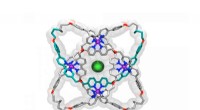
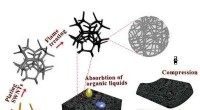
They are characterized by their rigid crystal structure, where atoms, ions, or molecules are arranged in a repeating pattern. These solids have well-defined melting points and boiling points, and their physical properties, such as hardness and density, are influenced by their atomic arrangements and bonding types.
Here are a few examples of inorganic solids:
1. Metals: Metals are elements that readily lose electrons to form positive ions (cations). They are typically lustrous, malleable, ductile, and good conductors of heat and electricity. Examples of metal solids include iron, aluminum, copper, and gold.
2. Ionic Compounds: Ionic compounds are composed of positively charged ions (cations) and negatively charged ions (anions) held together by electrostatic forces. They are usually crystalline, hard, brittle, and have high melting points. Examples include sodium chloride (NaCl), potassium nitrate (KNO3), and magnesium oxide (MgO).
3. Covalent Compounds: Covalent compounds are formed by the sharing of electrons between atoms. They can exist as molecular solids, such as carbon dioxide (CO2), or as network covalent solids, such as diamond and silicon dioxide (SiO2). In molecular solids, the molecules are held together by weak intermolecular forces, while in network covalent solids, the atoms are strongly bonded to each other through covalent bonds.
4. Salts: Salts are ionic compounds that are formed by the reaction of an acid and a base. They typically dissolve in water to form ions and are important electrolytes. Examples include sodium chloride (NaCl), potassium sulfate (K2SO4), and calcium carbonate (CaCO3).
Inorganic solids encompass a wide variety of substances and play essential roles in various fields, such as construction materials, electronics, catalysis, energy storage, and many industrial processes.