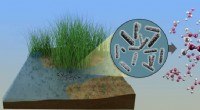
1. Burial: When plants and animals die, they are buried under layers of sediment, such as mud, sand, and silt. Over time, these sediments accumulate and form layers of rock, putting the buried organic matter under increasing pressure and temperature.
2. Compaction and Heat: As more sediments accumulate, they exert pressure on the buried organic matter, compacting it and forcing out water and air. The increasing temperature and pressure cause a series of chemical changes in the organic material.
3. Anaerobic Decomposition: In the absence of oxygen (anaerobic conditions), bacteria and other microorganisms break down the organic matter through a process called anaerobic decomposition. This process produces various compounds, including hydrocarbons (molecules composed mainly of hydrogen and carbon atoms).
4. Transformation and Migration: Over millions of years, the hydrocarbons produced during anaerobic decomposition undergo further chemical changes and transformations due to the high temperature and pressure. Lighter hydrocarbons, such as methane and ethane, can migrate through tiny pores and fractures in the rock layers. Heavier hydrocarbons, like those found in oil, remain in the source rock or accumulate in nearby porous and permeable rock formations.
5. Trapping and Accumulation: As the hydrocarbons migrate, they can become trapped in underground structures like domes, anticlines, or faults. These geological formations act as natural traps, preventing the hydrocarbons from escaping and allowing them to accumulate over time.
6. Reservoir Formation: The accumulated hydrocarbons form reservoirs within porous and permeable rock formations. These reservoirs can be located deep underground, sometimes several kilometers below the Earth's surface.
7. Exploration and Extraction: Once potential fossil fuel reservoirs are identified through geological surveys and exploration techniques, the hydrocarbons can be extracted through drilling and production operations. This involves bringing the oil or gas to the surface for processing, refining, and distribution for various energy and industrial applications.
It's important to note that the formation of fossil fuels is a complex and long-term process that takes millions of years. Today's fossil fuels were formed from organisms that lived during different geological eras, such as the Carboniferous period for coal, the Mesozoic era for oil, and the Cenozoic era for natural gas.