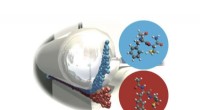
As temperature increases, the kinetic energy of the molecules in a substance also increases. This increased kinetic energy causes the molecules to move faster and collide with each other more frequently. The collisions between molecules can disrupt the hydrogen bonds, breaking them and causing the substance to become less viscous and more fluid.
For example, ice is a solid at room temperature because the hydrogen bonds between water molecules hold the molecules in a fixed lattice structure. However, when ice is heated, the hydrogen bonds are broken and the water molecules become more mobile, allowing them to flow and turn into liquid water.