- Hydrolysis: Water reacts with minerals to form new minerals and release ions, breaking down the rock. Water reacts with minerals in the rock, such as feldspar and mica, to produce clay minerals and release ions such as calcium, magnesium, and potassium.
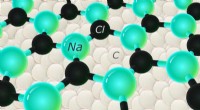
- Dissolution: Water dissolves some minerals, such as halite and gypsum, and carries them away in solution.
- Carbonation: Water that contains dissolved carbon dioxide reacts with minerals such as calcite and dolomite to form soluble bicarbonates, which are then carried away in solution.
- Oxidation: Water that contains dissolved oxygen can oxidize some minerals, such as iron-bearing minerals, causing them to break down.
2. Oxygen:
- Oxidation: Oxygen in the atmosphere reacts with minerals to form new minerals and release ions.
3. Carbon dioxide:
- Carbonation: Carbon dioxide reacts with minerals such as calcite and dolomite to form soluble bicarbonates, which are then carried away in solution.
- Acid rain: Carbon dioxide in the atmosphere combines with water vapor to form carbonic acid, which falls as acid rain. Acid rain reacts with minerals in the rock to form new minerals and release ions.
4. Plants and animals:
- Biological weathering: Plants release organic acids that react with minerals in the rock to form new minerals and release ions. Animals and plants living in soil cracks help break down rocks by their physical penetration. Animals may also contribute directly to weathering by breaking down rocks when burrowing, walking or digging.
5. Temperature changes:
- Thermal expansion and contraction: Changes in temperature can cause rocks to expand and contract, which can weaken them and make them more susceptible to weathering. Thermal stress resulting from differential heating and cooling of rocks lead to the flaking-off of thin layers as the outer portions of the rocks warm up or cool at a faster rate than the interiors.
6. Pressure changes:
- Unloading: When rocks are exposed to the surface of the Earth, they are subjected to less pressure, which can cause them to expand and break apart. Rapid removal of overlying rocks results in the release of the rocks from the enormous load leading to decompression. This commonly happens in mountainous regions.
7. Biological activity:
- Biological weathering: Plants and animals can release acids that dissolve minerals in rocks, and plant roots can physically pry apart rocks.
- Burrowing animals can create channels that allow water and air to penetrate rocks, leading to further weathering.