1. Brownian Motion: Particles in a solution undergo continuous random motion known as Brownian motion. This movement is caused by collisions between the particles and solvent molecules. As particles decrease in size, their Brownian motion becomes more pronounced.
2. Diffusion: Due to Brownian motion, particles spread out and distribute evenly throughout the solution over time. This process is called diffusion. It is a passive movement driven by the concentration gradient of the particles.
3. Sedimentation: Larger particles or molecules in a solution may experience sedimentation, which is the settling down of particles under the influence of gravity. Sedimentation occurs when the gravitational force acting on the particles is greater than the opposing forces, such as Brownian motion and collisions.
4. Osmosis: Osmosis refers to the movement of solvent molecules across a semipermeable membrane from a region of lower solute concentration to a region of higher solute concentration. This process occurs in response to the concentration gradient of the solute particles, aiming to equalize the solute concentration on both sides of the membrane.
5. Coagulation and Flocculation: Colloidal particles in a solution may undergo coagulation or flocculation. Coagulation involves the aggregation of particles due to interparticle attractions, while flocculation refers to the formation of loose, open structures called flocs. Coagulation and flocculation are influenced by factors such as particle size, charge, and the presence of electrolytes.
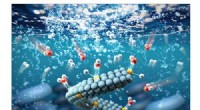
6. Hydration and Solvation: When a solute particle dissolves in a solvent, it interacts with the surrounding solvent molecules. For example, in an aqueous solution, water molecules form hydrogen bonds with the polar groups on the solute particles. This process is called hydration or solvation. The extent of hydration or solvation affects the solubility and behavior of the particles in the solution.
7. Electrostatic Interactions: Charged particles in a solution interact through electrostatic forces. Positively charged particles (cations) are attracted to negatively charged particles (anions), leading to the formation of ion pairs or more complex structures. These electrostatic interactions play a crucial role in the stability, reactivity, and behavior of charged particles in the solution.
8. Chemical Reactions: Particles in a solution can undergo various chemical reactions with each other or with the solvent molecules. These reactions can lead to the formation of new compounds, precipitation of insoluble products, or changes in the properties of the solution.
Understanding the behavior of particles in a solution is essential for many areas of science, such as chemistry, physics, biology, materials science, and environmental science. It helps in predicting the physical and chemical properties of solutions, designing and optimizing processes involving solutions, and comprehending the interactions and dynamics of particles at the microscopic level.