For a given photosensitive surface, there exists a threshold frequency below which no electrons are emitted, no matter how intense the light is. This threshold frequency is characteristic of the material of the surface. If the frequency of the incident light is below the threshold frequency, the photons do not have enough energy to overcome the binding energy of the electrons in the material, and no electrons are ejected.
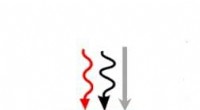
In the case of the photosensitive surface you are considering, the threshold frequency lies somewhere between the frequency of red light and the frequency of violet light. This means that red light, which has a frequency lower than the threshold frequency, does not have enough energy to eject electrons from the surface. On the other hand, violet light, which has a frequency higher than the threshold frequency, has enough energy to overcome the binding energy of the electrons and eject them from the surface.