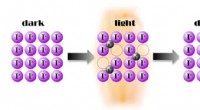
- Effect of Temperature: Generally, the density of a substance decreases with increasing temperature. As temperature increases, the particles gain more kinetic energy and move faster, leading to an increase in the volume occupied by the substance. This results in a decrease in density. For example, the density of water decreases as its temperature rises from 0°C to 100°C at atmospheric pressure.
- Effect of Pressure: In contrast to temperature, the density of a substance increases with increasing pressure. When pressure is applied, the particles are forced to come closer together, reducing the volume occupied by the substance. Consequently, the density increases. For instance, the density of air increases as the atmospheric pressure rises.
Therefore, while density is a fixed quantity for a particular compound at specific temperature and pressure conditions, it can vary when those conditions change. It's important to specify the temperature and pressure conditions when reporting the density of a substance.