Here's what happens to the particles of a liquid during the freezing process:
Formation of Clusters:
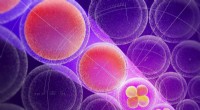
Initially, as the temperature of a liquid is lowered, its molecules slow down their motion. This causes them to become closer to one another, forming small clusters or groups.
Bonding and Crystallization:
As the temperature drops further, the intermolecular forces, such as hydrogen bonding in case of water, become more prominent. These forces attract and align the molecules into a regular arrangement. The molecules start to form a lattice-like structure, which represents the formation of crystalline solids.
Fixed Positions:
As more molecules join the growing crystals, the particles become locked in place and lose their ability to move freely. This restricted movement is due to the strong bonds holding the molecules in their fixed positions within the crystal structure.
Rigid Structure:
The tightly packed arrangement of molecules forms a rigid structure that gives the liquid its solid properties. The particles are no longer able to flow past each other easily, as they did in the liquid state. This rigidity is why solids maintain their shape and have a definite volume.
The transition from a liquid to a solid state during freezing also involves a reduction in the kinetic energy of the particles. As the molecules become fixed in their positions, their random motion decreases significantly, further contributing to the solid's stability.