A substrate in chemistry is a particular example of a reactant. Reactants go through chemical changes to yield products. In the case of a substrate, it is a reactant which has the potential to turn into a specific product, but only very slowly. The chemical reaction of a substrate is facilitated by an enzyme. Substrates are prevalent throughout both chemistry and biochemistry.
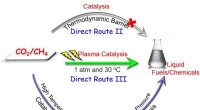
For any chemical reaction, the basic model is that you have at least one reactant. That reactant then will then shift to some intermediate stage before ultimately becoming its product. Chemical reactions only occur when the reaction is thermodynamically favorable, or when excess energy is supplied. For any reaction, a certain amount of energy to the reactant, known as the activation energy, is necessary to move it to the intermediate stage.
Substrates are unique in chemistry because of their need for a catalyst for the reaction to proceed. An enzyme is a chemical compound that can speed up the speed with which a reactant moves through a chemical reaction. In the case of chemistry, a substrate is essentially a reactant that can be eased along by the help of an outside molecule which, aside from its assisting function, does not participate in the reaction.
The way that a substrate and a catalyst interact can vary. In some cases, the presence of a catalyst can help stabilize the intermediate form of a substrate. Other times, it can destabilize the basic form of the substrate, making it easier to form the intermediate form. In cases in which the substrate consists of multiple compounds that need to react together, the catalyst can help by bringing the substrates (which are essentially reactants) together to speed their reaction.
While a substrate is a type of chemical reactant that often needs a catalyst, it should be noted that the catalyst does nothing to actually change the parameters of the chemical equation. At most, the effect of a catalyst on a substrate is only to speed along a reaction by lowering the amount of energy necessary to get the substrate to its intermediate state. Substrates without catalysts are perfectly able to react on their own, albeit slowly, and when a catalyst is used for a reaction, the catalyst itself is not consumed or modified.
The presence of substrates and catalysts is especially prevalent in biochemical reactions. I much of nature, reactions that would otherwise occur very slowly need to be sped up to provide an adequate amount of the products. One biological example of a catalyst is in the coagulation of milk, in which milk itself is the substrate that is catalyzed by the enzyme rennin. Another example that occurs within the human body is in the decomposition of hydrogen peroxide, a substance toxic to cells. In this case, the substrate is hydrogen peroxide and the catalyst is the enzyme catalase.