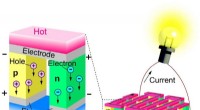
The Zeroth Law of Thermodynamics states that if two systems are in thermal equilibrium with a third system, then they are in thermal equilibrium with each other. This law is based on the observation that heat flows from a hotter object to a colder object, and never the other way around.
The First Law of Thermodynamics states that energy cannot be created or destroyed, only transferred. This law is based on the observation that the total amount of energy in an isolated system remains constant, even if the energy is transferred from one form to another.
The Second Law of Thermodynamics states that the entropy of a closed system always increases over time. This law is based on the observation that disorder always increases in a closed system, and never the other way around.
These three laws can be used to derive a number of other thermodynamic equations. For example, the equation for the change in entropy of a system is:
$$\Delta S = \frac{\Delta Q}{T}$$
where $\Delta S$ is the change in entropy, $\Delta Q$ is the heat added to the system, and $T$ is the temperature of the system.
The equation for the change in internal energy of a system is:
$$\Delta U = \Delta Q - \Delta W$$
where $\Delta U$ is the change in internal energy, $\Delta Q$ is the heat added to the system, and $\Delta W$ is the work done by the system.
The equation for the change in Gibbs free energy of a system is:
$$\Delta G = \Delta H - T\Delta S$$
where $\Delta G$ is the change in Gibbs free energy, $\Delta H$ is the change in enthalpy, $T$ is the temperature of the system, and $\Delta S$ is the change in entropy.
These equations are just a few examples of the many thermodynamic equations that can be derived from the laws of thermodynamics. These equations are used to study a wide variety of phenomena, including the behavior of heat engines, refrigerators, and chemical reactions.