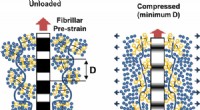
The inverse relationship between viscosity and pressure can be explained by the molecular structure of liquids. Liquids consist of molecules that are held together by intermolecular forces, such as van der Waals forces, hydrogen bonds, or ionic bonds. When pressure is applied to a liquid, the intermolecular forces between the molecules become stronger, causing them to pack more closely together and reducing the space available for them to move past each other. This results in a decrease in the liquid's viscosity.
The rate at which viscosity decreases with increasing pressure varies depending on the type of liquid and the temperature. For most liquids, the decrease in viscosity with pressure is more significant at lower temperatures. This is because the intermolecular forces between the molecules are stronger at lower temperatures, making them more resistant to the effects of pressure.
In summary, the viscosity of liquids generally decreases with increasing pressure due to the closer packing of molecules and reduced resistance to flow. However, the rate of decrease in viscosity with pressure depends on the specific liquid and the temperature.