1. Activation of Substrate:
- Enzymes bind to specific substrate molecules, which are the reactants in a chemical reaction.
- The binding of the enzyme to the substrate lowers the activation energy required for the reaction to occur.
2. Formation of Enzyme-Substrate Complex:
- The enzyme and substrate form a complex, known as the enzyme-substrate complex.
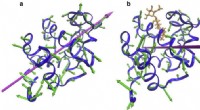
- The enzyme's active site, which is a specific region with particular amino acid residues, binds to the substrate and forms temporary bonds.
3. Catalytic Action:
- The catalytic site of the enzyme actively participates in the chemical reaction.
- It facilitates the breaking or formation of chemical bonds within the substrate, leading to the conversion of the substrate into products.
- Enzymes accomplish this by providing an alternative reaction pathway that requires lower activation energy compared to the uncatalyzed reaction.
4. Release of Products:
- Once the reaction is complete, the products are released from the enzyme's active site.
- The enzyme is now free to bind to another substrate molecule and repeat the catalytic cycle.
5. Specificity:
- Enzymes exhibit high specificity for their substrates.
- Each enzyme typically recognizes and binds to a particular substrate or a group of structurally related substrates.
- This specificity ensures that enzymes only catalyze specific reactions within a complex mixture of molecules.
Enzymes play a crucial role in various biological processes by significantly increasing the rates of chemical reactions within living organisms. Their catalytic activity enables efficient and controlled biochemical transformations essential for metabolism, energy production, digestion, DNA replication, and many other cellular functions.