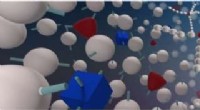
Water is a polar solvent, meaning that it has a partial positive charge on one end of the molecule and a partial negative charge on the other end. This polarity allows water to interact with and dissolve other polar molecules. Polar compounds are molecules that have a partial positive charge on one end and a partial negative charge on the other end.
When a polar compound is dissolved in water, the positive end of the compound is attracted to the negative end of the water molecule, and the negative end of the compound is attracted to the positive end of the water molecule. This interaction is called hydrogen bonding. Hydrogen bonding is a strong intermolecular force, so it holds the polar compound in solution.
Water is able to dissolve a wide variety of polar compounds, including salts, sugars, and proteins. These compounds are all polar, so they are able to interact with water molecules through hydrogen bonding.