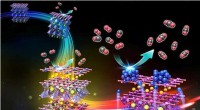
Step-by-step, the conversion of ethyne to ethane through catalytic hydrogenation can be represented as follows:
1. Activation of Hydrogen:
In the presence of the catalyst, hydrogen gas (H₂) is dissociated into individual hydrogen atoms (H•). The catalyst plays a crucial role in weakening the H-H bond and generating these reactive hydrogen atoms.
2. Adsorption of Ethyne:
Ethyne molecules (C₂H₂) are adsorbed onto the surface of the catalyst. The carbon-carbon triple bond interacts with the metal atoms of the catalyst, forming a surface complex.
3. Addition of Hydrogen Atoms:
The adsorbed ethyne molecule reacts with the hydrogen atoms provided by the catalyst. Each carbon atom of the triple bond accepts one hydrogen atom, forming new carbon-hydrogen bonds. This step proceeds through a series of elementary steps, where the hydrogen atoms are sequentially added to the carbon atoms.
4. Desorption of Ethane:
Once both carbon atoms of the triple bond have bonded with hydrogen atoms, the ethane molecule (C₂H₆) is formed. The ethane molecule desorbs from the surface of the catalyst, leaving behind the regenerated catalyst sites.
5. Overall Reaction:
The overall reaction for the catalytic hydrogenation of ethyne to ethane can be expressed as follows:
```
C₂H₂ (ethyne) + 2 H₂ (hydrogen gas) → C₂H₆ (ethane)
```
In summary, the conversion of ethyne to ethane is achieved through catalytic hydrogenation, where hydrogen gas reacts with ethyne in the presence of a catalyst, leading to the addition of hydrogen atoms to the carbon-carbon triple bond and the formation of ethane.