• Home
  • Chemistry
  • Astronomy
  • Energy
  • Nature
  • Biology
  • Physics
  • Electronics
  • Distillation Explained: Principles, Process & Applications
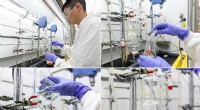
    Distillation is a separation technique that separates components of a liquid mixture by selective evaporation and condensation. The components of a liquid mixture have different boiling points. The liquid mixture is heated in a distillation column to a temperature at which the more volatile component vaporizes, while the less volatile component remains in the liquid phase. The vapor rises up the column and is condensed back into a liquid. The condensed liquid is collected as the distillate. The less volatile component remains in the liquid phase at the bottom of the column and is collected as the residue.

    The difference in boiling points of the components of a liquid mixture is the key factor that allows distillation to separate them. The greater the difference in boiling points, the easier it is to separate the components by distillation.

    Distillation is used in a wide variety of applications, including:

    * Ethanol production

    * Petroleum refining

    * Pharmaceutical manufacturing

    * Chemical processing

    * Water purification

    Distillation is a versatile separation technique that can be used to separate a wide variety of liquid mixtures. It is a relatively simple and inexpensive technique, and it can be scaled up to large volumes.
    Science Discoveries © www.scienceaq.com