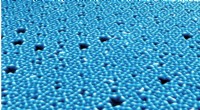
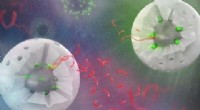
1. Dissolution: The sodium chloride crystals start to dissolve in the water. The water molecules surround the individual sodium and chloride ions, breaking the ionic bonds that hold the crystal lattice together. This process is known as dissociation.
2. Hydration: As the sodium and chloride ions are released into the water, they become surrounded by water molecules. This process is called hydration. The water molecules interact with the ions through electrostatic forces, forming a layer of water molecules around each ion.
3. Formation of Aqueous Sodium Chloride: As more and more sodium chloride crystals dissolve, the concentration of sodium and chloride ions in the water increases. This results in the formation of an aqueous solution of sodium chloride, commonly known as saline or salt water.
4. Disappearance of Crystals: As the sodium chloride crystals continue to dissolve, they gradually disappear. The individual ions become dispersed throughout the water, and the solid crystal structure is no longer visible.
5. Homogeneous Mixture: The resulting solution is homogeneous, meaning that the sodium chloride is uniformly distributed throughout the water. The solution appears clear and transparent, with no visible solid particles.
In summary, when sodium chloride crystals are added to 5ml of water, they dissolve and dissociate into individual sodium and chloride ions, which become hydrated and dispersed throughout the water, forming a homogeneous aqueous solution of sodium chloride.