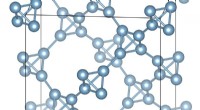
An ionic compound is composed of positively charged ions (cations) and negatively charged ions (anions). The electrostatic attraction between the oppositely charged ions holds the compound together. In the case of Li2S, the lithium ions (Li+) are attracted to the sulfide ions (S2-). The overall charge of the compound is neutral, since there are equal numbers of positive and negative charges.
Ionic bonds are typically formed between a metal and a non-metal. The difference in electronegativity between the two atoms determines the strength of the ionic bond. Electronegativity is a measure of an atom's ability to attract electrons. The greater the difference in electronegativity between two atoms, the stronger the ionic bond will be. In the case of Li2S, the electronegativity of lithium is 1.0, while the electronegativity of sulfur is 2.5. The difference in electronegativity is 1.5, which is relatively large. This means that the ionic bond between lithium and sulfur is quite strong.