Lead bromide is an ionic compound, which means that it is composed of positively charged ions (cations) and negatively charged ions (anions). When lead bromide is dissolved in water, the ions separate and become surrounded by water molecules. This process is called ionization. The ions are then able to move freely in the water, which allows them to conduct electricity.
The ability of a solution to conduct electricity is called its conductivity. The conductivity of a solution depends on the concentration of ions in the solution. The more ions there are in a solution, the higher its conductivity.
Aqueous lead bromide has a high concentration of ions, so it is a good conductor of electricity.
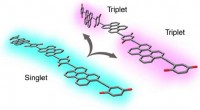


![Cutting-Edge Organophotoredox Catalysis Enables Precise Styrene Oxidation for Efficient [2+2] Cycloaddition](https://www.scienceaq.com/article/uploadfiles/202110/2021102314231523_S.jpg)