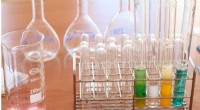
Depending on the amount of borax added to the water, different concentrations of borax solution can be obtained. Saturated borax solutions contain the maximum amount of solute (borax) that the solvent (water) can dissolve at a specific temperature. Upon reaching saturation, any additional borax added will not dissolve but remain undissolved within the solution.
Saturated borax solutions exhibit several properties and have various applications, such as:
Adhesives: Borax is used as a component in certain adhesives and glues, often mixed with water and other ingredients. The adhesive properties of borax solutions stem from the ability of borate ions to form complexes with certain organic molecules, creating strong bonds between surfaces.
Cleaning agents: Borax is commonly used in household cleaning products due to its mild abrasive and water-softening properties. It can be mixed with water to create a paste or solution for cleaning surfaces, removing stains, and deodorizing areas.
Fire retardants: Borax solutions have fire-retardant capabilities. When exposed to heat, borax releases water vapour and forms a protective layer on combustible materials, slowing down the spread of fire.
Flux in soldering: Borax is employed as a flux in soldering, particularly when joining metal surfaces. It helps remove impurities, such as oxides, from the metal surfaces, ensuring better bonding between the solder and the metal.
Antiseptic and antifungal properties: Borax solutions exhibit mild antiseptic and antifungal properties. They can be used to treat certain fungal infections of the skin and to preserve organic materials from microbial degradation.
It's important to note that borax, like many other chemicals, should be handled with care, avoiding direct contact with the skin or eyes. Consult safety guidelines and wear appropriate protective gear when working with borax solutions.