Home
Chemistry
Astronomy
Energy
Nature
Biology
Physics
Electronics
Science
>>
Science Discoveries
> >>
Chemistry
Hydrogen Ion (H+): What It Is and What It Isn't
A hydrogen ion (H+) is not referred to as an electron. An electron is a subatomic particle with a negative electric charge, while a hydrogen ion is a positively charged ion formed when a hydrogen atom loses an electron.
Single vs. Double Displacement Reactions: A Comprehensive Guide
Proton vs. Hydrogen Ion: Understanding the Key Differences
Chemistry
Unveiling Interfacial Water Dynamics on Palladium Single-Crystal Surfaces via Advanced Raman Spectroscopy and Simulations
Elucidating Chlorine‑Driven Oxidation of Methacrolein in NOx‑Free Environments
Assessing the Ecotoxicity of Nano-Copper and Azole Fungicides in Waterways
Science Discoveries
UBC Researchers Map Tuberculosis Enzyme at Atomic Level
BYU Chemists Convert Gold into Purple Nanoparticles Using Artificial Photosynthesis
How Blockchain Can Revolutionize Supply Chains and Support COVID-19 Healthcare
Science Discoveries
Chemistry
Astronomy
Energy
Nature
Biology
Physics
Electronics
Geology
Solar Eclipse
Math
other
Nanotechnology
Chemistry
Gold Nanoparticles Turn Biofuel Waste into Valuable Additives
Precise Chemical Fingerprinting Unlocks Unambiguous Wine Identification
New Chemical Complex Accelerates Elimination of Radioactive Strontium from the Human Body
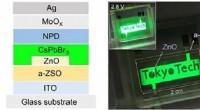
Enhancing Efficiency and Brightness in Perovskite LED Technology
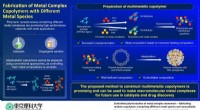
Precision Synthesis of Multimetallic Building Blocks for Advanced Hybrid Nanomaterials
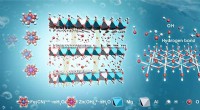
Advanced Ion‑Conducting Membrane Boosts Performance of Alkaline Zinc‑Iron Flow Batteries
|
Geology
|
Math
|
Solar Eclipse
Science Discoveries © www.scienceaq.com