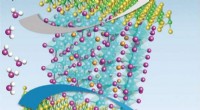
There are three main types of chemical bonds:
1. Covalent bonds are formed when two atoms share one or more pairs of valence electrons. This is the most common type of chemical bond, and it is found in molecules such as water (H2O), methane (CH4), and carbon dioxide (CO2).
2. Ionic bonds are formed when one atom transfers one or more valence electrons to another atom. This creates two oppositely charged ions, which are held together by electrostatic attraction. Ionic bonds are found in compounds such as sodium chloride (NaCl), potassium iodide (KI), and calcium oxide (CaO).
3. Metallic bonds are formed when the valence electrons of metal atoms are delocalized, meaning that they are not associated with any one particular atom. This creates a "sea" of electrons that holds the metal atoms together. Metallic bonds are found in all metals, such as copper, aluminum, and iron.
The type of chemical bond that forms between two atoms depends on their electronegativities. Electronegativity is a measure of an atom's ability to attract electrons. The greater the electronegativity difference between two atoms, the more polar the bond will be. A polar bond is a bond in which the electrons are not shared equally between the two atoms.
In addition to electronegativity, the size and shape of atoms also play a role in determining the type of chemical bond that forms. For example, smaller atoms tend to form covalent bonds, while larger atoms tend to form ionic bonds. Atoms with irregular shapes also tend to form covalent bonds.
Chemical bonds are essential for holding atoms together and forming molecules and compounds. They are also responsible for the properties of matter, such as its strength, hardness, and melting point.