The reaction can be represented as follows:
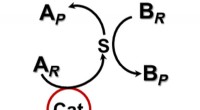
Boiled liver (reducing agent) + Manganese dioxide (oxidizing agent) → Reduced manganese compound + Oxidized liver compounds
During the reaction, the electrons from the boiled liver (which contains organic matter and various compounds) are transferred to the manganese dioxide, resulting in the reduction of manganese dioxide to a lower oxidation state. The oxidized liver compounds, on the other hand, are formed as a result of the loss of electrons.
The specific products of the reaction will depend on the exact conditions under which it occurs, such as the temperature, pH, and concentrations of the reactants. In general, the reaction can lead to the formation of various manganese compounds, such as manganese(II) oxide or manganese(III) oxide, and oxidized organic compounds from the boiled liver.
It's important to note that this reaction is not a common occurrence in everyday life and is usually observed in controlled laboratory settings. The interaction between boiled liver and manganese dioxide is not typically encountered in food preparation or biological systems.