1. Melting point determination: The melting point of a compound is the temperature at which it changes from a solid to a liquid state. By comparing the melting point of a substance to the melting point of a known pure sample, one can determine if the substance is indeed pure.
2. Boiling point determination: The boiling point of a compound is the temperature at which it changes from a liquid to a gas state. By comparing the boiling point of a substance to the boiling point of a known pure sample, one can determine if the substance is indeed pure.
3. Thin layer chromatography (TLC): TLC is a technique used to separate different components of a mixture. By comparing the TLC pattern of a substance to the TLC pattern of a known pure sample, one can determine if the substance is indeed pure.
4. Gas chromatography (GC): GC is a technique used to separate and identify different components of a mixture based on their volatility. By comparing the GC profile of a substance to the GC profile of a known pure sample, one can determine if the substance is indeed pure.
5. High performance liquid chromatography (HPLC): HPLC is a technique used to separate and identify different components of a mixture based on their polarity. By comparing the HPLC chromatogram of a substance to the HPLC chromatogram of a known pure sample, one can determine if the substance is indeed pure.
6. Nuclear magnetic resonance (NMR) spectroscopy: NMR spectroscopy is a technique used to identify and quantify different atoms and groups of atoms within a molecule. By comparing the NMR spectrum of a substance to the NMR spectrum of a known pure sample, one can determine if the substance is indeed pure.
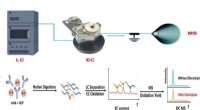
7. Mass spectrometry (MS): MS is a technique used to identify and quantify different molecules based on their mass-to-charge ratio. By comparing the mass spectrum of a substance to the mass spectrum of a known pure sample, one can determine if the substance is indeed pure.
By using one or more of these analytical techniques, one can effectively check the purity of a compound.