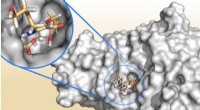
1. Communication: Different models can be used to communicate different aspects of a compound. For example, a structural formula can show the connectivity of atoms in a molecule, while a ball-and-stick model can show the spatial arrangement of atoms.
2. Complexity: The complexity of a model can depend on the purpose for which it is being used. For example, a simple line drawing may be sufficient to represent a molecule for a qualitative discussion, while a more detailed three-dimensional model may be needed for a quantitative analysis.
3. Audience: The intended audience for a model can also influence the type of model that is used. For example, a model that is intended for use by students may be more simplified than a model that is intended for use by researchers.
4. Resources: The resources that are available to scientists can also limit the type of models that they can use. For example, if a scientist does not have access to sophisticated software, they may need to use a simpler model to represent a compound.
Here are some specific examples of different types of models that are used to represent compounds:
- Structural formulas are two-dimensional representations of molecules that show the connectivity of atoms. They are often used in qualitative discussions of compounds.
- Ball-and-stick models are three-dimensional representations of molecules that show the spatial arrangement of atoms. They are often used to visualize molecules and to understand their properties.
- Space-filling models are three-dimensional representations of molecules that show the van der Waals radii of atoms. They are often used to understand the packing of molecules in crystals.
- Electron density maps are three-dimensional representations of the electron density in a molecule. They are often used to understand the electronic structure of molecules.
The choice of which model to use is a complex one that depends on a variety of factors. By carefully considering the purpose for which a model is being used, the complexity of the model, the audience for the model, and the resources that are available, scientists can select the best model to represent a compound.