Explanation:
The intermolecular forces in a compound depend on the polarity of the molecules and their ability to form hydrogen bonds.
Water:
- Water molecules are polar, meaning they have a partial positive charge on the hydrogen atoms and a partial negative charge on the oxygen atom.
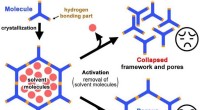
- This polarity allows water molecules to form strong hydrogen bonds with each other. Hydrogen bonds are intermolecular forces that form when a hydrogen atom covalently bonded to a highly electronegative atom (such as oxygen, nitrogen, or fluorine) experiences electrostatic attraction to another electronegative atom.
Isopropanol:
- Isopropanol molecules are also polar, but to a lesser extent than water molecules.
- The presence of the hydrocarbon group (-CH(CH3)2) in isopropanol reduces the polarity of the molecule compared to water.
- Additionally, isopropanol can form hydrogen bonds, but the hydrogen bonding capability is weaker than in water due to the lower electronegativity of the oxygen atom in isopropanol compared to water.
Therefore, water has stronger intermolecular forces due to its higher polarity and stronger hydrogen bonding capability compared to isopropanol.