Evaporation to Dryness:
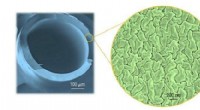
- When a solution of solid is evaporated to dryness, the solvent (usually water) is completely removed, leaving behind the solid solute in a highly concentrated form. The rapid evaporation process does not allow sufficient time for the formation of large, well-defined crystals.
- The resulting solid is typically a fine powder or amorphous mass, consisting of very small, irregularly shaped crystals or even individual molecules. The lack of crystal structure makes it more prone to caking and clumping.
- The absence of solvent means that the solid obtained through evaporation to dryness has a higher concentration of the solute compared to crystals formed by crystallization.
Crystallization by Cooling:
- In the case of crystallization by cooling, the solution is slowly cooled down, allowing the solute molecules to gradually come out of the solution and arrange themselves into a regular, ordered structure, known as a crystal lattice.
- As the temperature decreases, the solubility of the solute decreases, causing it to precipitate from the solution in the form of well-defined, larger crystals.
- The crystals formed by cooling are typically larger in size and have a more regular shape, exhibiting facets and defined crystal faces. They are less prone to caking and clumping due to their organized structure.
- The presence of residual solvent in the crystals obtained by cooling can influence their composition and properties.
Summary Table:
| Characteristic | Evaporation to Dryness | Crystallization by Cooling |
|---|---|---|
| Crystal Size and Structure | Small, irregular crystals or amorphous mass | Larger, well-defined crystals with regular shape |
| Tendency to Cake and Clump | More likely to cake and clump | Less likely to cake and clump |
| Concentration of Solute | Higher concentration due to complete solvent removal | Lower concentration due to residual solvent |
| Appearance | Fine powder or amorphous material | Larger, individual crystals with distinct shapes |
In conclusion, the solids obtained from evaporating a solution to dryness and letting it crystallize by cooling differ primarily in their crystal size, structure, and propensity to clump. The desired properties and intended use of the solid determine which method is more suitable.