Some key areas of physical chemistry include:
Thermodynamics: This branch deals with the study of heat and its relation to other forms of energy. It covers topics such as heat transfer, entropy, free energy, and equilibrium.
Chemical Kinetics: This branch focuses on the rates of chemical reactions and the factors that influence them, such as temperature, concentration, and catalysts.
Quantum Chemistry: This area explores the application of quantum mechanics to understand the electronic structure of atoms and molecules, their bonding, and their properties.
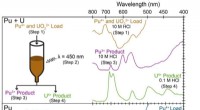
Spectroscopy: This branch studies the interaction of matter with electromagnetic radiation, including the absorption, emission, and scattering of light. It is used to determine the structure and composition of molecules.
Electrochemistry: This field examines the relationship between electrical phenomena and chemical reactions. It covers topics such as electrochemical cells, electrode potentials, and electrolysis.
Statistical Mechanics: This branch uses statistical methods to understand the macroscopic properties of matter based on the behavior of its microscopic components.
Physical chemistry plays a crucial role in various fields and industries, such as materials science, energy storage and conversion, environmental chemistry, pharmaceuticals, and biotechnology. It provides insights into the physical and chemical processes that occur in complex systems and enables the development of new technologies and materials.