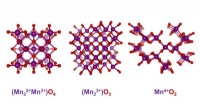
1. Crystal Structure: Ionic compounds typically form crystals with a highly ordered and regular arrangement of ions. This arrangement is driven by the electrostatic attraction between positively charged cations and negatively charged anions, leading to the formation of ionic crystals.
2. Melting and Boiling Points: Ionic compounds generally have high melting and boiling points due to the strong electrostatic forces holding the ions together. Overcoming these forces requires a significant amount of energy, resulting in higher melting and boiling points.
3. Solubility: Ionic compounds exhibit varying solubility in different solvents. They are generally soluble in polar solvents, such as water, because the polar solvent molecules can interact with the charged ions and break apart the ionic lattice. However, ionic compounds are usually insoluble in nonpolar solvents like hexane, which lack the necessary polarity to overcome the ionic attraction.
4. Electrical Conductivity: In their solid state, ionic compounds are poor conductors of electricity because the ions are held in fixed positions within the crystal lattice. However, when dissolved in water or melted, ionic compounds dissociate into free ions, allowing them to move and carry an electrical charge, making them good conductors of electricity in these states.
5. Hardness: Due to the strong ionic bonds, ionic compounds tend to be hard and brittle. The rigid crystal structure and the difficulty in breaking the ionic bonds contribute to their hardness. However, this rigidity also makes them susceptible to shattering or breaking under mechanical stress.
6. Chemical Reactivity: Ionic compounds participate in chemical reactions primarily through ion exchange or the formation of new ionic bonds. They can undergo various reactions, such as precipitation, acid-base reactions, and redox reactions, depending on the nature of the ions involved.
7. Hygroscopicity: Some ionic compounds exhibit hygroscopicity, meaning they readily absorb moisture from the atmosphere. This property is often observed in ionic compounds containing small and highly charged ions, which have a high affinity for water molecules.
Understanding the properties imparted by ionic bonding is essential for predicting the behavior and applications of ionic compounds in various fields, such as chemistry, materials science, engineering, and pharmaceuticals.