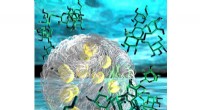
Benzoic acid is a weak acid with a pKa of 4.2. This means that it only partially dissociates in water, and most of the molecules remain in their undissociated form. The undissociated molecules are not very soluble in water because they are nonpolar.
Sodium benzoate, on the other hand, is a strong salt that completely dissociates in water. The sodium ions and benzoate ions are both very soluble in water because they are polar. The benzoate ions can form hydrogen bonds with the water molecules, which makes them even more soluble.
As a result, sodium benzoate is much more soluble in water than benzoic acid. This difference in solubility is important for the extraction of benzoic acid from aqueous solutions. Benzoic acid can be extracted into an organic solvent, such as diethyl ether, by adding sodium hydroxide to the aqueous solution. The sodium hydroxide will convert the benzoic acid into sodium benzoate, which will then be extracted into the organic solvent.