1. Physical Changes:
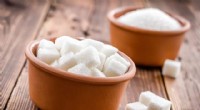
- Solution: One substance (solute) dissolves into another (solvent) forming a homogeneous mixture called a solution. The solute particles disperse evenly throughout the solvent, resulting in a uniform composition. Common examples include dissolving sugar in water or salt in water.
- Suspension: If the particles of one substance do not dissolve but remain dispersed in the other substance, a suspension is formed. The particles are large enough to eventually settle down due to gravity. Examples include muddy water or sand in water.
- Colloid: Colloids are mixtures where the particles are intermediate in size between those in solutions and suspensions. They appear homogeneous to the naked eye but show the scattering of light (Tyndall effect). Examples include milk, mayonnaise, and fog.
2. Chemical Changes (Reactions):
- Formation of New Compounds: When two or more substances react chemically, they can form new compounds with different properties. The starting substances are transformed into new products, and the chemical bonds between atoms are rearranged. Common examples include combustion reactions (burning of fuel), acid-base reactions, and oxidation reactions.
- Release or Absorption of Energy: Chemical reactions can involve the release or absorption of energy in the form of heat, light, or sound. For instance, burning wood releases heat energy, and explosions release both heat and sound energy.
3. No Reaction: In some cases, mixing substances may not result in any noticeable changes. The substances may remain chemically unchanged and simply mix physically, without forming any new compounds.
4. Phase Changes:
- Melting and Freezing: Mixing substances with different melting points can result in phase changes. Adding heat can melt a solid (such as ice) into a liquid, while cooling can cause a liquid (such as water) to freeze into a solid.
- Boiling and Condensation: Similarly, mixing substances with different boiling points can lead to phase changes. Liquids with lower boiling points can evaporate, while vapors or gases can condense to form liquids when the temperature or pressure changes.
The specific outcome when mixing two substances depends on their chemical properties, concentrations, temperature, pressure, and other factors. It's crucial to understand the characteristics and potential reactivity of the substances involved to predict the result accurately.