1. Diphenyl oxalate: This is the main chemical responsible for the light emission in blue glow sticks.
2. Bis(2,4,6-trichlorophenyl) oxalate: This compound helps to stabilize the diphenyl oxalate and enhances the light output of the glow stick.
3. 9,10-Diphenylanthracene: This is the fluorescent dye that emits blue light when it is excited by the chemical reaction between the diphenyl oxalate and the bis(2,4,6-trichlorophenyl) oxalate.
4. 2-(4-tert-Butylphenyl)-5-(4-biphenylyl)-1,3,4-oxadiazole: This compound is a yellow dye that is added to the glow stick to give it a more pleasing color.
5. 4,4'-Bis(diethylamino)benzophenone: This compound is a photosensitizer that helps to initiate the chemical reaction between the diphenyl oxalate and the bis(2,4,6-trichlorophenyl) oxalate.
6. 1,2,4-Triazole: This compound is a catalyst that speeds up the chemical reaction between the diphenyl oxalate and the bis(2,4,6-trichlorophenyl) oxalate.
7. Water: This compound is used to dissolve the other chemicals and to create a homogeneous mixture.
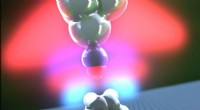
The chemical reaction that takes place in a blue glow stick is a chemiluminescence reaction. This type of reaction occurs when a chemical reaction produces light energy. In the case of a blue glow stick, the chemical reaction between the diphenyl oxalate and the bis(2,4,6-trichlorophenyl) oxalate produces excited state diphenylanthracene molecules. These excited state molecules then emit blue light as they return to their ground state.