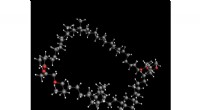
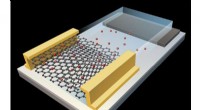
A classic example of non-commutative substances in chemistry is the reaction between two enantiomers, which are mirror-image isomers of a chiral molecule. Enantiomers have the same chemical formula and connectivity of atoms, but they differ in the spatial arrangement of their atoms. When two enantiomers are reacted with each other, the order in which they are mixed can affect the outcome of the reaction. For example, in the reaction of two enantiomers of a chiral amine with a chiral acid, the order in which the enantiomers are added can determine which enantiomer of the product is formed in excess.
Another example of non-commutative substances is the reaction of certain types of polymers. Some polymers, known as tactic polymers, can exist in different stereoregular forms, such as isotactic, syndiotactic, or atactic. The stereoregularity of a polymer affects its physical and chemical properties, such as its crystallinity, melting point, and solubility. The order in which different tactic polymers are mixed can affect the overall properties of the resulting polymer blend.
Non-commutative substances are also found in supramolecular chemistry, which deals with the interactions and self-assembly of molecules into larger structures. In some cases, the order in which different molecules are combined can determine the structure and properties of the resulting supramolecular assembly.
The non-commutative nature of certain substances can have important implications in various fields of chemistry, such as organic synthesis, asymmetric catalysis, polymer chemistry, and supramolecular chemistry. Understanding and controlling the effects of non-commutativity is crucial for designing and optimizing chemical reactions and materials with desired properties.