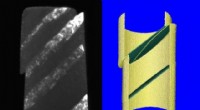
Silver halides, such as silver chloride, silver bromide, and silver iodide, are used in photographic emulsions because they are sensitive to light. When light hits a silver halide crystal, it causes the electrons in the crystal to be excited. These excited electrons then react with the silver ions in the crystal to form silver atoms. The silver atoms then clump together to form visible silver particles.
The size and shape of the silver particles determines the tone of the image. Smaller silver particles produce lighter tones, while larger silver particles produce darker tones. The size and shape of the silver particles are controlled by the type of silver halide used, the concentration of the silver halide, and the temperature of the emulsion.