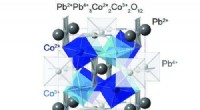
In contrast, the representative unit of an ionic compound is an ion pair, which consists of a positively charged ion (cation) and a negatively charged ion (anion). Ions are formed when atoms lose or gain electrons, resulting in an overall electrical charge. In an ionic compound, the cations and anions are held together by electrostatic forces.
Here is a table summarizing the key differences between the representative units of molecular and ionic compounds:
| Feature | Molecular Compound | Ionic Compound |
|---|---|---|
| Representative unit | Molecule | Ion pair |
| Composition | Covalently bonded atoms | Positively charged ion (cation) and negatively charged ion (anion) |
| Electrical charge | Electrically neutral | Overall electrical charge |
Examples of molecular compounds include water (H2O), methane (CH4), and carbon dioxide (CO2). Examples of ionic compounds include sodium chloride (NaCl), potassium iodide (KI), and magnesium oxide (MgO).