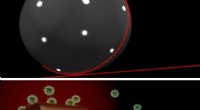
Here's what happens during the reaction:
- The potassium metal loses its outermost electron and becomes a positively charged potassium ion (K+).
- The water molecules donate hydrogen ions (H+) and oxygen atoms. The hydrogen ions react with the electrons released by potassium to form hydrogen gas (H2). On the other hand, the oxygen atoms bond with the potassium ions to form potassium hydroxide (KOH) and potassium superoxide (KO2).
The overall reaction can be represented as:
4K (s) + 2H2O (l) + O2 (g) → 4KOH (aq) + 2KO2 (s) + H2 (g)