Formation of Sodium and Chloride Ions
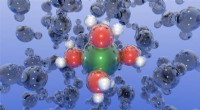
Sodium and chloride ions are formed when sodium and chlorine atoms lose or gain electrons, respectively.
* Sodium: Sodium atoms have one electron in their outermost shell. When they lose this electron, they become positively charged sodium ions (Na+).
* Chloride: Chlorine atoms have seven electrons in their outermost shell. When they gain one electron, they become negatively charged chloride ions (Cl-).
Symbol for Sodium and Chloride Ions
The symbol for sodium ion is Na+, while the symbol for chloride ion is Cl-.
Comparison of Sodium and Chloride Ions
| Property | Sodium Ion (Na+) | Chloride Ion (Cl-) |
|---|---|---|
| Charge | +1 | -1 |
| Mass | 22.99 atomic mass units (amu) | 35.45 amu |
| Abundance in human body | Most abundant cation | Second most abundant anion |
| Functions | Fluid balance, blood pressure regulation, nerve transmission | Fluid balance, blood pressure regulation, digestion |
Sodium and chloride ions are essential for life. They play a vital role in many physiological processes and are found in a wide variety of foods.