Here are some similarities in mixtures:
1. Composition: Mixtures are composed of two or more components, which can be elements, compounds, or even other mixtures. The composition of a mixture can vary, and the relative amounts of the components can be different.
2. Physical Properties: The physical properties of a mixture are typically an average or combination of the properties of its components. For example, the density of a mixture of water and alcohol will be somewhere between the densities of pure water and pure alcohol.
3. Chemical Properties: Mixtures do not undergo chemical reactions, and the components of a mixture retain their individual chemical properties. This means that the chemical properties of a mixture are simply the sum of the chemical properties of its components.
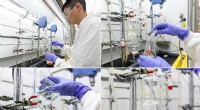
4. Separation: Mixtures can be separated into their components by physical means, such as filtration, distillation, or chromatography. These techniques exploit differences in the physical properties of the components, such as their boiling points, solubility, or size.
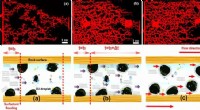
5. Heterogeneity: Mixtures are typically heterogeneous, meaning that their composition is not uniform throughout. The components of a mixture may be distributed unevenly, and there may be visible differences in color, texture, or other physical properties.
It's important to note that while mixtures share these similarities, there can also be significant differences between different types of mixtures. For example, some mixtures may be homogeneous, meaning that their composition is uniform throughout, while others may be heterogeneous. Additionally, the interactions between the components of a mixture can vary, and these interactions can affect the properties and behavior of the mixture.