One common method is to use a fermentation tube, which is a specialized test tube that has a small cup-shaped depression at the bottom. When a fermentation reaction is performed in a fermentation tube, the gases that are produced will collect in the depression at the bottom of the tube. The amount of gas that is produced can be measured by noting the volume of gas that collects in the depression.
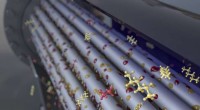
Another method for detecting gases in fermentation reactions is to use a gas chromatograph. A gas chromatograph is a scientific instrument that can be used to separate and identify different gases. A gas chromatograph works by passing the gases through a column that is packed with a stationary phase. The different gases will interact with the stationary phase to different extents, which will cause them to separate from each other. The separated gases are then detected by a detector, which can be a flame ionization detector, a mass spectrometer, or another type of detector.
Finally, gases in fermentation reactions can also be detected by their odor. Some gases, such as carbon dioxide and hydrogen sulfide, have a distinctive odor that can be used to identify them.