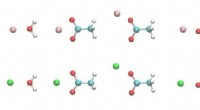
Strong electrolytes are substances that completely dissociate into ions when dissolved in water. This means that all of the compound's molecules break apart into their constituent ions, resulting in a high concentration of ions in the solution. Strong electrolytes typically include ionic compounds such as sodium chloride (NaCl), potassium hydroxide (KOH), and sulfuric acid (H2SO4).
On the other hand, a neutral solution is one in which the concentration of hydrogen ions (H+) and hydroxide ions (OH-) is equal, resulting in a pH value of 7. Neutral solutions can be formed by dissolving certain types of compounds, such as water itself, or by mixing an acid and a base in appropriate proportions.
While some strong electrolytes may produce neutral solutions when dissolved in water (such as sodium chloride, which forms a neutral solution with a pH of 7), not all neutral solutions are formed from strong electrolytes. For example, pure water is a neutral solution, but it does not contain any strong electrolytes. Instead, the neutral pH of water is due to the equilibrium between the dissociation of water molecules into H+ and OH- ions and the recombination of these ions back into water molecules.
Therefore, the presence of a neutral solution does not necessarily indicate the presence of a strong electrolyte. The identity and concentration of the dissolved substance determine the solution's electrolyte strength and its pH value.