1. Molecular Structure:
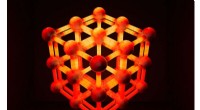
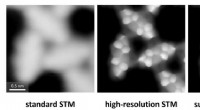
Covalent molecules consist of atoms held together by shared electron pairs. The arrangement of atoms and the sharing of electrons determine the molecular structure. Molecules can have various structures, including linear, branched, cyclic, and more complex three-dimensional shapes.
2. Intermolecular Forces:
Covalent molecules experience intermolecular forces, such as van der Waals forces (London dispersion forces), dipole-dipole interactions, and hydrogen bonding (for molecules with H-F, H-O, or H-N bonds). These forces determine the physical properties and behavior of covalent compounds.
3. Melting and Boiling Points:
Covalent molecules generally have lower melting and boiling points compared to ionic compounds due to weaker intermolecular forces. The strength of intermolecular forces influences the energy required to overcome them and transition between solid, liquid, and gaseous states.
4. Solubility:
The solubility of covalent molecules in different solvents depends on their polarity. Polar covalent molecules tend to dissolve in polar solvents, while nonpolar covalent molecules dissolve in nonpolar solvents. For instance, polar molecules like ethanol dissolve well in water, a polar solvent, whereas nonpolar molecules like oil do not.
5. Electrical Conductivity:
Covalent molecules are generally poor conductors of electricity. This is because they lack freely mobile ions. When dissolved in water, covalent compounds usually do not dissociate into ions, resulting in low electrical conductivity.
6. Chemical Reactivity:
Covalent molecules exhibit varying chemical reactivity based on the strength and nature of the covalent bonds. Some covalent bonds are more reactive and can easily break or form new bonds, while others are more stable and resistant to change.
7. Physical State:
At room temperature, covalent molecules can exist as gases (e.g., oxygen, carbon dioxide), liquids (e.g., water, alcohol), or solids (e.g., sugar). The physical state is influenced by the molecular structure, intermolecular forces, and temperature.
8. Hardness and Brittleness:
Covalent solids tend to be harder and more brittle compared to ionic or metallic solids. The strong covalent bonds within the crystal lattice provide structural rigidity but make the material susceptible to fracture under stress.
9. Malleability and Ductility:
Covalent solids are generally not malleable or ductile. Malleability refers to the ability to be hammered into thin sheets, while ductility is the ability to be drawn into thin wires. Covalent solids lack these properties due to the fixed positions of atoms held by strong covalent bonds.
10. Crystalline Structure:
Covalent compounds can form various crystal structures, including molecular crystals, network covalent crystals, and giant covalent crystals. The arrangement of atoms and molecules in these structures affects their physical properties.