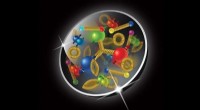
1. Protons: Protons are positively charged particles found in the nucleus of an atom. The nucleus is the central core of an atom where most of its mass is concentrated. Protons are located at the center of the nucleus alongside neutrons.
2. Neutrons: Neutrons are neutral particles (with no electric charge) found in the nucleus alongside protons. Neutrons contribute to the mass of the atom but do not have a direct impact on its chemical properties.
3. Electrons: Electrons are negatively charged particles that orbit around the nucleus in specific energy levels or electron shells. Electrons are arranged in shells based on their energy levels, with each shell representing a different distance from the nucleus.
a. First Energy Level (K-Shell): The first energy level, closest to the nucleus, contains up to two electrons.
b. Second Energy Level (L-Shell): The second energy level can hold up to eight electrons.
c. Third Energy Level (M-Shell): The third energy level can accommodate up to 18 electrons.
d. Higher Energy Levels: As you move further from the nucleus, higher energy levels can accommodate more electrons, with their specific configurations depending on the element.
4. Orbitals: Within each energy level, electrons occupy specific regions called orbitals. Orbitals represent the probable locations where electrons can be found around the nucleus. Different types of orbitals include s, p, d, and f orbitals, each with distinct shapes and orientations.
In summary, protons and neutrons are located together in the nucleus at the center of an atom, while electrons are found in specific energy levels or shells surrounding the nucleus. The arrangement and behavior of these subatomic particles determine the properties and chemical behavior of elements and molecules.