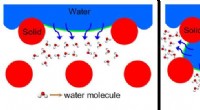
The amount by which the boiling point increases depends on the concentration of salt in the water. The more salt that is added, the higher the boiling point will be. For example, a 10% salt solution boils at approximately 108.5 degrees Celsius (227.3 degrees Fahrenheit), while a 20% salt solution boils at approximately 120 degrees Celsius (248 degrees Fahrenheit).
This phenomenon is important in cooking, as it can be used to control the temperature at which water boils. For example, when making pasta, it is common to add salt to the water to prevent it from boiling over. The increased boiling point helps to keep the water from evaporating too quickly and creating bubbles that can rise to the surface and overflow the pot.