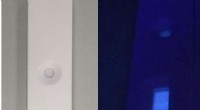
The Tyndall effect can be used to distinguish between a colloid and a solution by observing the way the light is scattered. If the dispersion scatters light, then it is a colloid. If the dispersion does not scatter light, then it is a solution.
Here is a table summarizing the differences between colloids and solutions:
| Property | Colloid | Solution |
|---|---|---|
| Particle size | 1 nm - 1000 nm | Smaller than 1 nm |
| Scattering of light | Yes (Tyndall effect) | No |
| Appearance | Cloudy or opaque | Clear |
| Examples | Milk, fog, mayonnaise | Sugar water, salt water, vinegar |