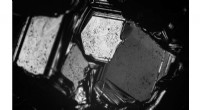
Hematite occurs in many different forms, including as massive deposits, in veins, and as a component of other rocks. The color of hematite varies depending on its composition and impurities, and can range from red to black to brown.
Hematite is an important industrial mineral, and is used in a wide variety of applications, including as an iron ore, a pigment, and a source of iron for the production of steel.
Here are some additional details about hematite:
* Hematite is the mineral form of iron(III) oxide.
* It has a Mohs hardness of 5.5-6.5, which means it is harder than glass but softer than quartz.
* Hematite is a brittle mineral, and it breaks with a conchoidal fracture.
* It has a specific gravity of 5.26-5.34, which means it is denser than most other common rocks and minerals.
* Hematite is a ferrimagnetic mineral, which means it is weakly attracted to magnets.
* It is a good conductor of heat and electricity.
* Hematite is a common mineral in the Earth's crust, and it can be found in a wide variety of geological settings.
* It is the primary ore of iron, and is used in the production of steel.
* Hematite is also used as a pigment, and it is commonly found in red paints, powders, and cosmetics.
* Hematite is also used in the production of certain types of jewelry and decorative objects.