1. Atoms: Atoms are the smallest building blocks of matter. They are composed of a nucleus, which contains protons and neutrons, and electrons, which orbit the nucleus. Each element is made up of a specific number of protons, which determines its atomic number.
2. Elements: Elements are substances that are composed of only one type of atom. Each element is represented by a one- or two-letter symbol, such as H for hydrogen, He for helium, and O for oxygen. There are currently 118 known elements, which are listed in the periodic table of elements.
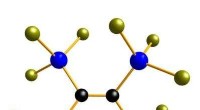
3. Molecules: Molecules are groups of atoms that are held together by chemical bonds. A molecule can be composed of atoms of the same element (such as H2, a molecule of hydrogen gas) or different elements (such as H2O, a molecule of water). When atoms combine to form molecules, they share or exchange electrons in order to achieve a stable configuration.
In summary, atoms are the fundamental units of matter, and elements are substances composed of only one type of atom. Molecules are groups of atoms held together by chemical bonds, and they can be composed of atoms of the same or different elements. The relationships among atoms, elements, and molecules form the basis for understanding the structure and behavior of matter in the world around us.