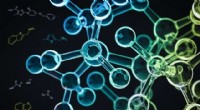
For example, hydrochloric acid (HCl) is a strong acid because it completely dissociates in water, releasing all of its hydrogen ions. Acetic acid (CH₃COOH) is a weak acid because it only partially dissociates in water, releasing only a small fraction of its hydrogen ions.
The strength of an acid can be measured using a pH scale. The pH scale measures the concentration of hydrogen ions in a solution. A pH value of 0 indicates that the solution has a very high concentration of hydrogen ions and is therefore very acidic. A pH value of 14 indicates that the solution has a very low concentration of hydrogen ions and is therefore very basic. A pH value of 7 indicates that the solution has a neutral pH and contains equal concentrations of hydrogen ions and hydroxide ions (OH-).
Acids have a pH value below 7, while bases have a pH value above 7. The higher the concentration of hydrogen ions in a solution, the lower the pH value.