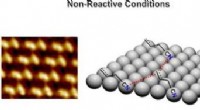
Hydrogen bonding is not a type of ionic bond. Rather, it is a dipole-dipole interaction between a hydrogen atom that is covalently bonded to an electronegative atom (such as N, O, or F) and another electronegative atom. The electronegative atom attracts the electrons in the covalent bond, creating a partial positive charge on the hydrogen atom. This partial positive charge then interacts with the partial negative charge on the other electronegative atom, forming a hydrogen bond.
In contrast to ionic bonds, which are formed by the transfer of electrons from one atom to another, hydrogen bonds are formed by the electrostatic attraction between partial charges. Hydrogen bonds are weaker than ionic bonds, but they still play an important role in the structure and function of molecules and materials. For example, hydrogen bonds are responsible for the high boiling point of water, the structure of proteins, and the base pairing of DNA.




![Cutting-Edge Organophotoredox Catalysis Enables Precise Styrene Oxidation for Efficient [2+2] Cycloaddition](https://www.scienceaq.com/article/uploadfiles/202110/2021102314231523_S.jpg)